Klaviyo email marketing is one of the most powerful ways to grow an ecommerce store in 2026 — but only if you set it up correctly. This guide walks you through everything: how it works, which automations generate the most revenue, and whether it’s the right tool for your business.
Table of Contents
Who Should Use Klaviyo Email Marketing?
Before diving in, let’s be honest: this platform is not for everyone.
It’s built specifically for ecommerce businesses — Shopify, WooCommerce, BigCommerce — that want to use customer behavior data to drive sales. If you run a blog, a SaaS company, or a service business, tools like ActiveCampaign or ConvertKit might serve you better.
But if you sell products online and want to turn your customer data into predictable revenue, this tool is worth the investment.
What Makes Klaviyo Email Marketing Different?
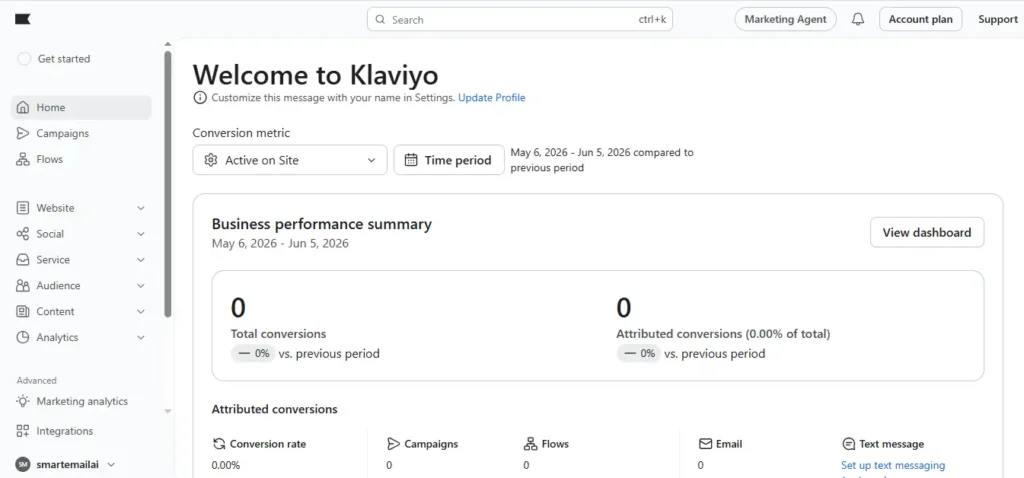
Most email platforms let you send campaigns and set up basic sequences. Klaviyo does something fundamentally different: it tracks every customer action on your store and uses that data to trigger highly relevant messages at exactly the right moment.
Here’s a quick comparison:
| Feature | Klaviyo | Mailchimp | ActiveCampaign |
|---|---|---|---|
| Ecommerce-native data | ✅ Deep integration | ⚠️ Basic | ⚠️ Requires setup |
| Revenue attribution per email | ✅ Yes | ❌ No | ❌ No |
| Behavior-based segmentation | ✅ Advanced | ⚠️ Limited | ✅ Good |
| Shopify integration | ✅ Native | ⚠️ Third-party | ⚠️ Third-party |
| Price at scale | ⚠️ Expensive | ✅ Cheaper | ✅ Mid-range |
Looking for Mailchimp alternatives? See our full comparison: Best Mailchimp Alternatives
The key difference is revenue tracking. You see exactly how much money each flow, campaign, and individual email generates — which changes how you make decisions entirely.
The 5 Klaviyo Email Marketing Flows That Drive the Most Revenue
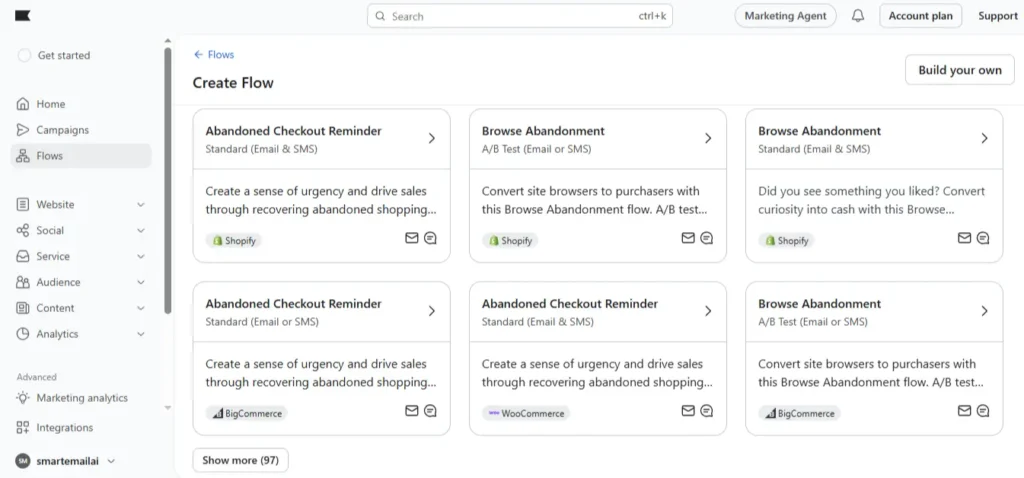
Flows are automated sequences that trigger based on customer behavior. These five are responsible for the majority of revenue in most stores:
1. Welcome Series (Days 1–7)
When someone subscribes but hasn’t purchased yet, you have a short window to make a strong impression. A well-structured welcome series typically includes:
- Day 1: Brand story + what makes you different
- Day 3: Social proof (reviews, bestsellers)
- Day 7: A modest discount to push the first purchase
Welcome flows convert at 2–3x the rate of regular campaigns because the subscriber is at peak engagement.
2. Abandoned Cart Recovery
This is the highest-ROI flow for most stores. Roughly 70% of shoppers add items to cart and leave without buying. A three-email sequence at 1 hour, 24 hours, and 72 hours typically recovers 5–15% of those carts.
3. Browse Abandonment
Less well-known but highly valuable: when a visitor views a product page multiple times without adding to cart, the platform triggers a personalized nudge. These emails often achieve open rates above 50%.
4. Post-Purchase Flow
Most brands stop communicating after the sale — that’s a missed opportunity. A post-purchase sequence can reduce returns, cross-sell complementary products, and collect reviews at exactly the right moment (3–7 days after delivery).
5. Win-Back Campaign
Customers who haven’t purchased in 90–180 days need a different message than active buyers. A win-back flow reintroduces your brand and typically includes your strongest offer.
Klaviyo Email Marketing Segmentation: The Feature That Separates Good from Great
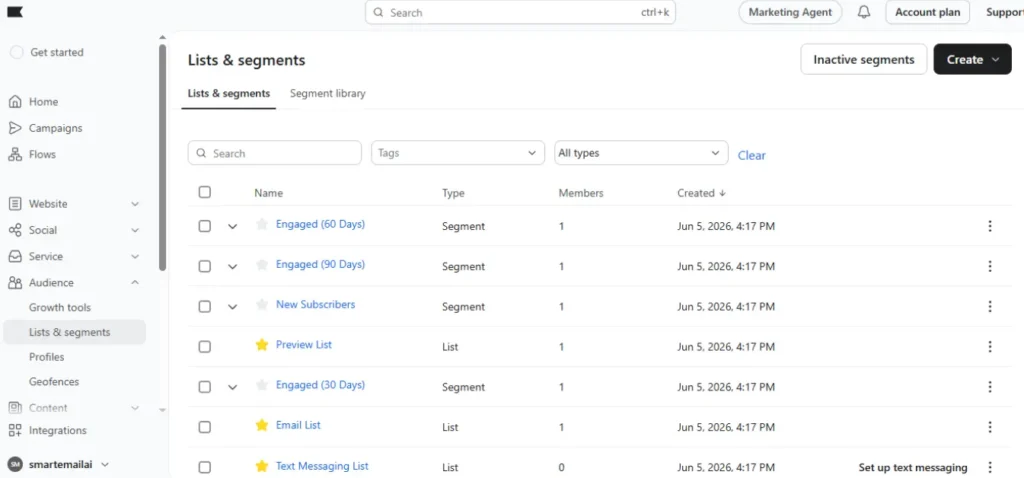
Sending the same email to your entire list is rarely effective. The platform’s segmentation engine lets you build precise audiences based on:
- Purchase behavior: One-time buyers vs. repeat customers vs. VIPs
- Engagement level: Active openers vs. subscribers who haven’t opened in 60 days
- Product interest: Browsed a specific category or product
- Predicted lifetime value: The AI model predicts which customers will spend the most
The result: your VIP customers get early access to new products, while lapsed customers get your best discount offer. Same brand — two completely different experiences — and both convert far better than a generic blast.
Klaviyo Email Marketing Pricing: What to Expect in 2026
The platform uses a contact-based pricing model:
- Free: Up to 250 contacts, 500 emails/month — good for testing
- ~$45/month: Up to 1,000 contacts
- ~$100/month: Up to 2,500 contacts
- ~$200/month: Up to 5,000 contacts
- ~$700+/month: 50,000+ contacts
The most common complaint is how quickly costs scale. The fix: regularly clean your list by removing subscribers who haven’t opened in 180+ days. This reduces costs and improves deliverability.
Honest Downsides of Klaviyo Email Marketing
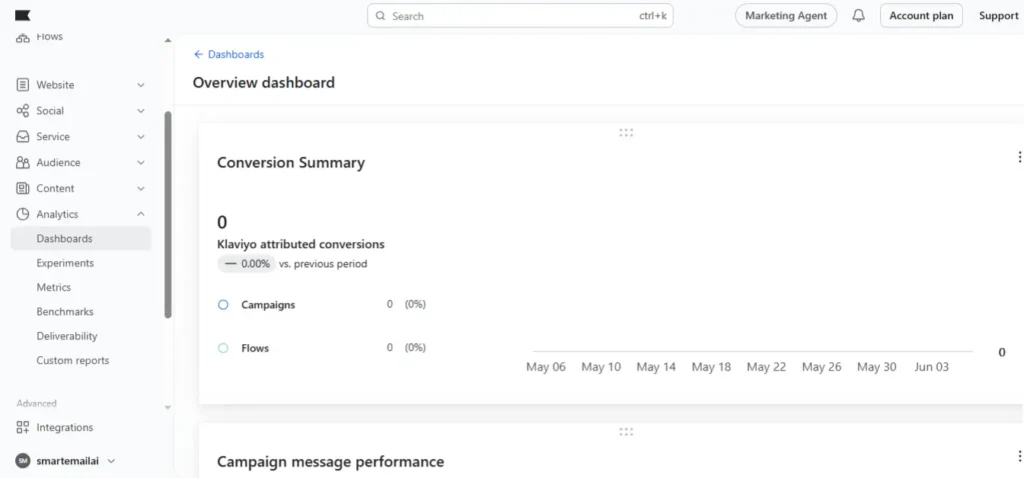
No tool is perfect. Here’s what to know before committing:
1. Real learning curve – Setting up flows, integrations, and analytics takes time. Budget 2–3 weeks before things run smoothly.
2. Cost grows with your list – If you’re building your list aggressively but not converting, the monthly fee can outpace revenue.
3. Not ideal outside ecommerce – Service businesses, B2B, or SaaS companies will find the platform limiting.
4. Template editor has limits – The drag-and-drop builder is functional but not highly flexible. Advanced customization often requires HTML.
How to Get Started: Your First 30 Days
Week 1: Connect your store, import your existing list, verify your sending domain.
Week 2: Build your Welcome Series and Abandoned Cart flows — these two alone will immediately start recovering revenue.
Week 3: Create your core segments: VIP buyers, at-risk customers, and subscribers who have never purchased.
Week 4: Send your first segmented campaign (not to your whole list). Analyze results and adjust.
By the end of month one, you’ll have a clear picture of what’s working and where to focus next.
Final Verdict: Is Klaviyo Email Marketing Worth It?
For ecommerce brands, the answer is yes – with realistic expectations. The platform earns its reputation through depth and data, not simplicity. The brands that get the best results use it as a customer intelligence system that happens to send emails.
If you’re serious about growing an ecommerce store in 2026, the setup investment is worth it. If you’re just starting out, the free plan is enough to learn before scaling up.
FAQ
It’s used for ecommerce automation — abandoned cart recovery, welcome series, post-purchase flows, and advanced customer segmentation.
For ecommerce specifically, yes. The revenue tracking and behavior-based automation are far more advanced than Mailchimp’s.
Yes — it has one of the deepest native Shopify integrations available, tracking revenue, product views, and customer journeys automatically.
It starts free for up to 250 contacts, then scales from ~$45/month. Full pricing at klaviyo.com/pricing.
Not sure Klaviyo is the right fit? We’ve reviewed and ranked the:Best AI Email Marketing Tools in 2026
including free and budget-friendly options.